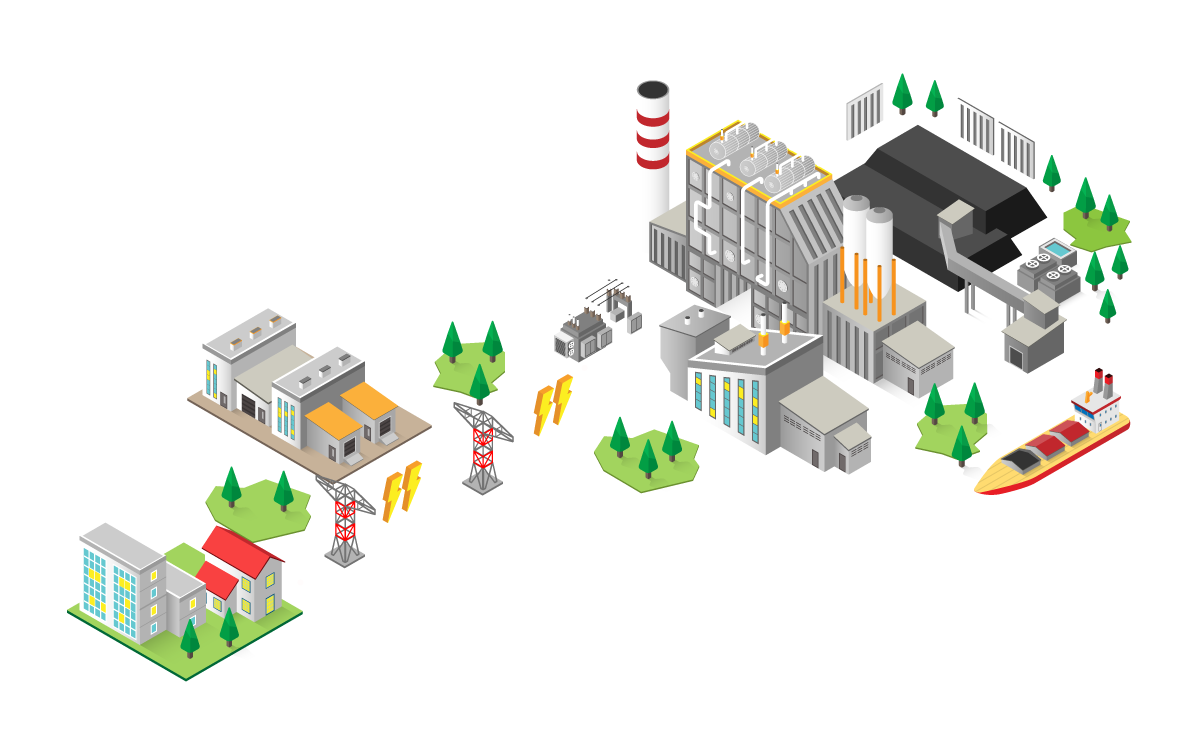
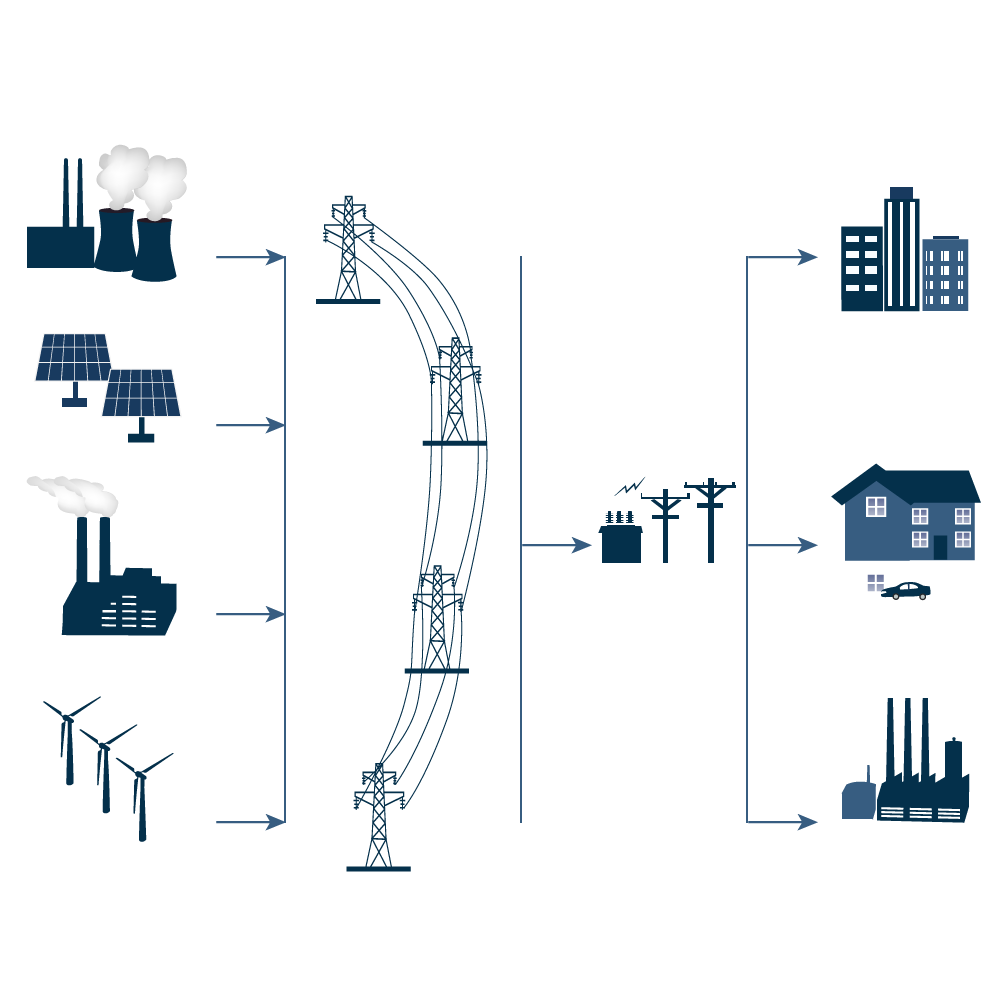
The coal fleet has been the foundation of the American electricity grid and continues to be an integral part of the evolving energy landscape. Currently, the coal fleet is responsible for over 17 percent of U.S. electricity needs. With an infrastructure network that includes a complex transmission system, and access to highways, railways, and waterways, the coal fleet provides consistent, dispatchable, fuel-secure power on a 24/7 basis. It is critical to maintaining affordable electricity prices, and a reliable and resilient electricity grid.
RELIABLE
Reliability is all about keeping America’s lights on. A more reliable grid is one with fewer and shorter power interruptions.
Coal plants are rated as highly dependable by electric grid operators. Coal plants are 2 times more dependable than wind farms and almost 8 times more dependable than solar panels.
Coal plants provide fuel security. The average coal plant stores a 4-month supply of coal on-site to ensure that fuel is always available. Coal is not dependent on weather or just-in-time fuel delivery.
RESILIENT
Resilience focuses on extreme disturbances with potentially catastrophic consequences. According to FERC, a resilient grid has the “ability to withstand and reduce the magnitude and/or disruption of disruptive events, which includes the capability to anticipate, adapt to, and/or rapidly recover from such an event.”
The continuing retirement of fuel-secure electricity sources may be making the grid less resilient to major disturbances that could interrupt electricity for prolonged periods of time. Fuel security — ensuring that fuel is always available to generate electricity — enables the grid to absorb and recover quickly from manmade or natural disturbances that otherwise could have severe, possibly catastrophic, consequences.
The coal fleet helps to keep electricity prices affordable. States that rely on coal for most of their electricity pay lower electricity prices than the national average.
ENERGY
INNOVATION
We believe that a technology-based strategy is the most realistic way to reduce carbon emissions. To succeed, such a strategy must be based on sustained investments and allow adequate time to develop and deploy technologies, including carbon capture utilization and storage. To protect air quality, utilities have invested more than $90 billion in emission controls for coal plants since 2001.
America’s Power supports an “All of the Above” energy strategy because each electricity resource― coal, natural gas, nuclear, renewables, and storage technology ― complements each other in different ways to provide reliable and affordable electricity.